
Beyond Black and White: 7 Exterior Color Trends Taking Over New England
Photo by Kirsten Francis
For years, the modern farmhouse aesthetic dominated new construction and renovations across New England. White exteriors paired with black windows and trim offered a clean, graphic look that felt both classic and contemporary.
But while the black-and-white palette isn't disappearing anytime soon, designers are seeing homeowners embrace softer, more layered alternatives—ones that feel more connected to the landscape, architecture, and history of the region.
"Design moves in cycles, and what I'm seeing now is a natural evolution away from high-contrast, graphic exteriors and toward something warmer and more site-specific," says Debra Spindler Pinals, founder of Spinpin Creative. "Clients have been asking for palettes that feel like they are part of the landscape. In New England specifically, that's translating into warm neutrals—creamy whites with depth, muted olives, taupes with a hint of green or brown—colors that feel like they belong here, next to the stone walls and the trees."
Across New England, that shift is showing up in warm neutrals, sophisticated blues, heritage-inspired greens, and tonal color combinations that feel timeless rather than trend-driven.
1. Warm Neutrals Replace Stark Contrast
One of the most noticeable changes is the move away from bright whites and dramatic contrast.
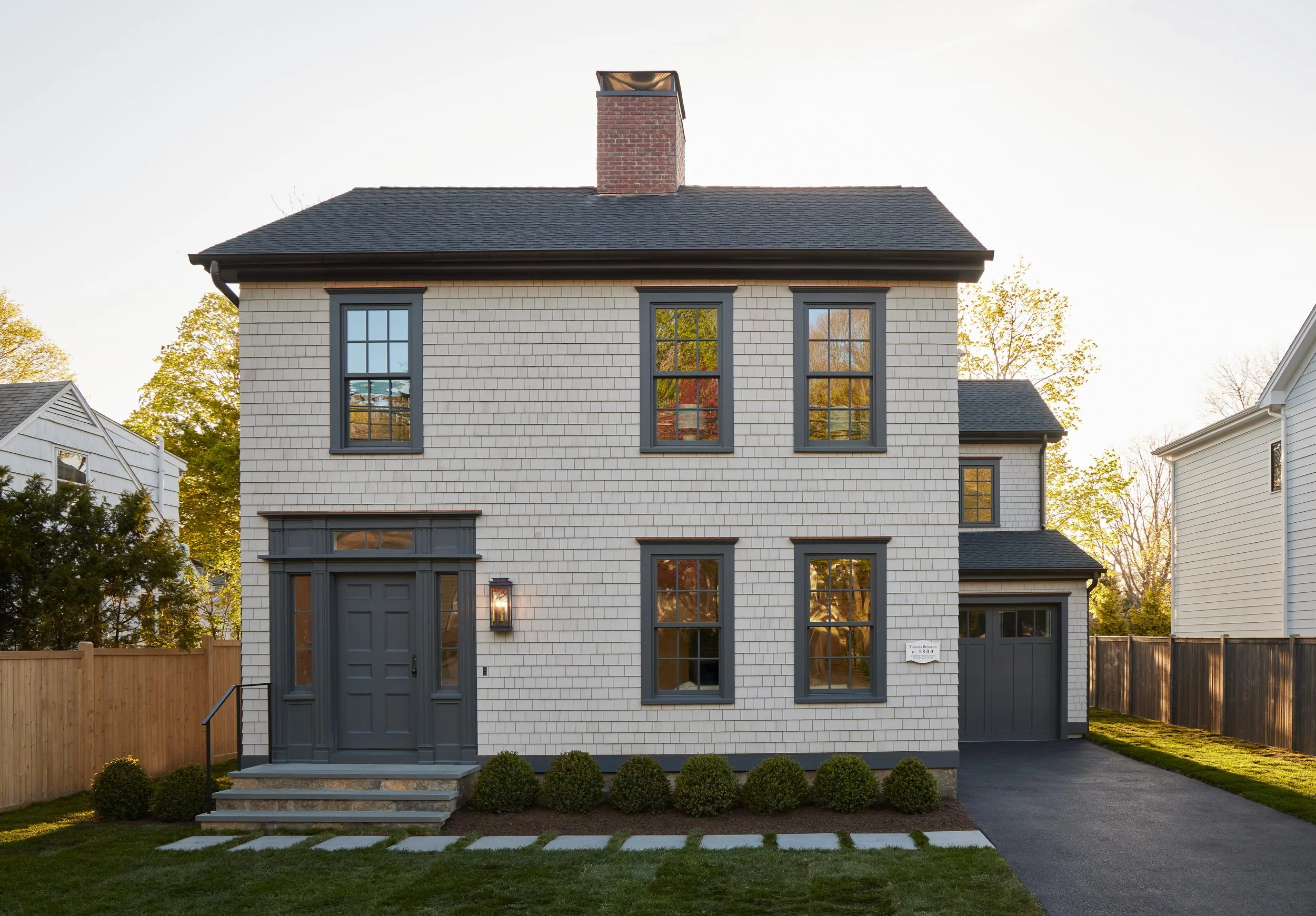
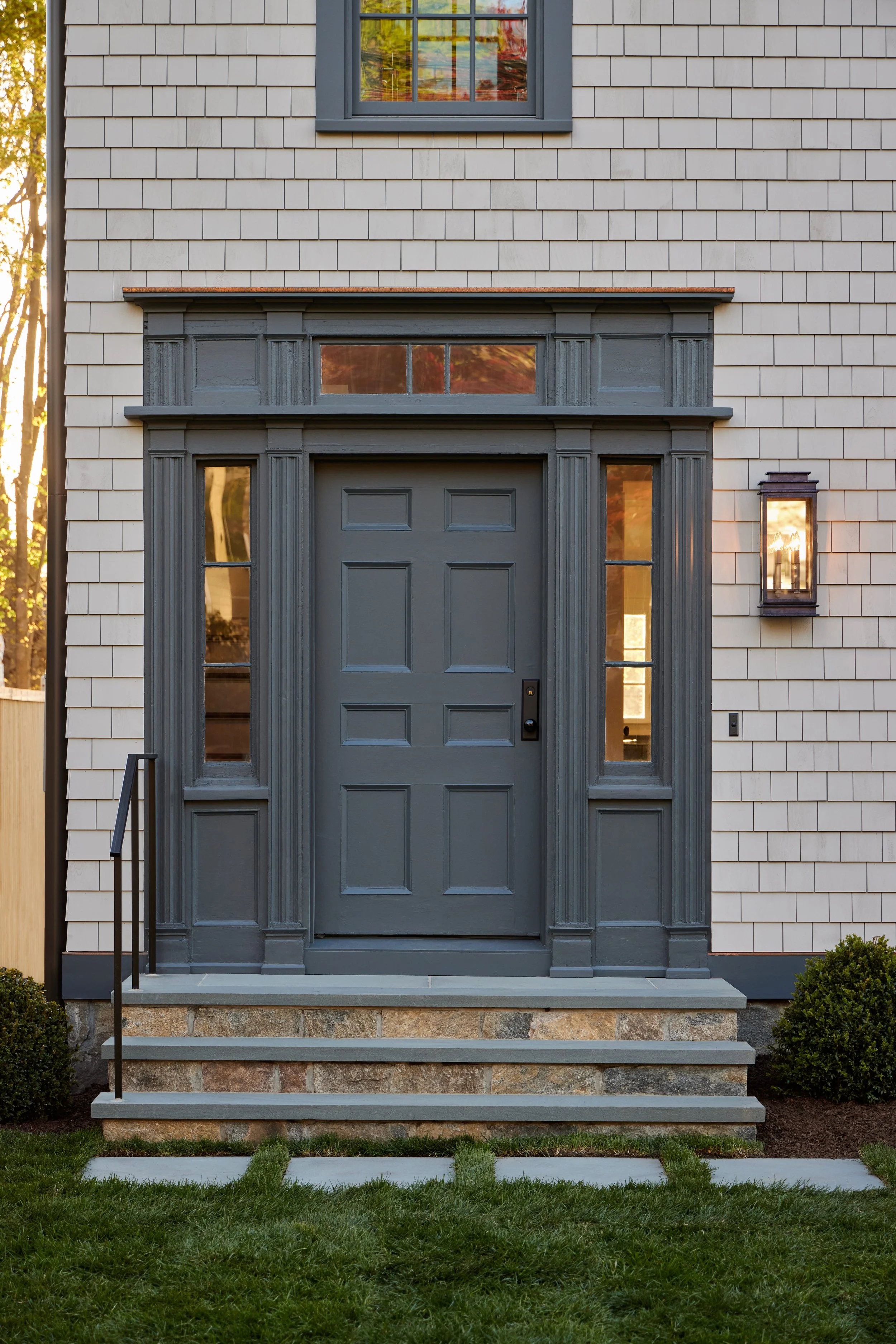
Instead, homeowners are gravitating toward creamy whites, soft stone colors, warm taupes, and muted olive tones—colors that feel at home alongside New England's stone walls, mature trees, and historic architecture.
"Exterior palettes also seem to be mirroring what's happening inside the home right now," says Spindler Pinals. "Cool gray is being replaced by warmer, more natural tones both inside and out. The same mushroom, taupe, and warm olive showing up on interior walls is now showing up on the exterior. The whole house feels connected."
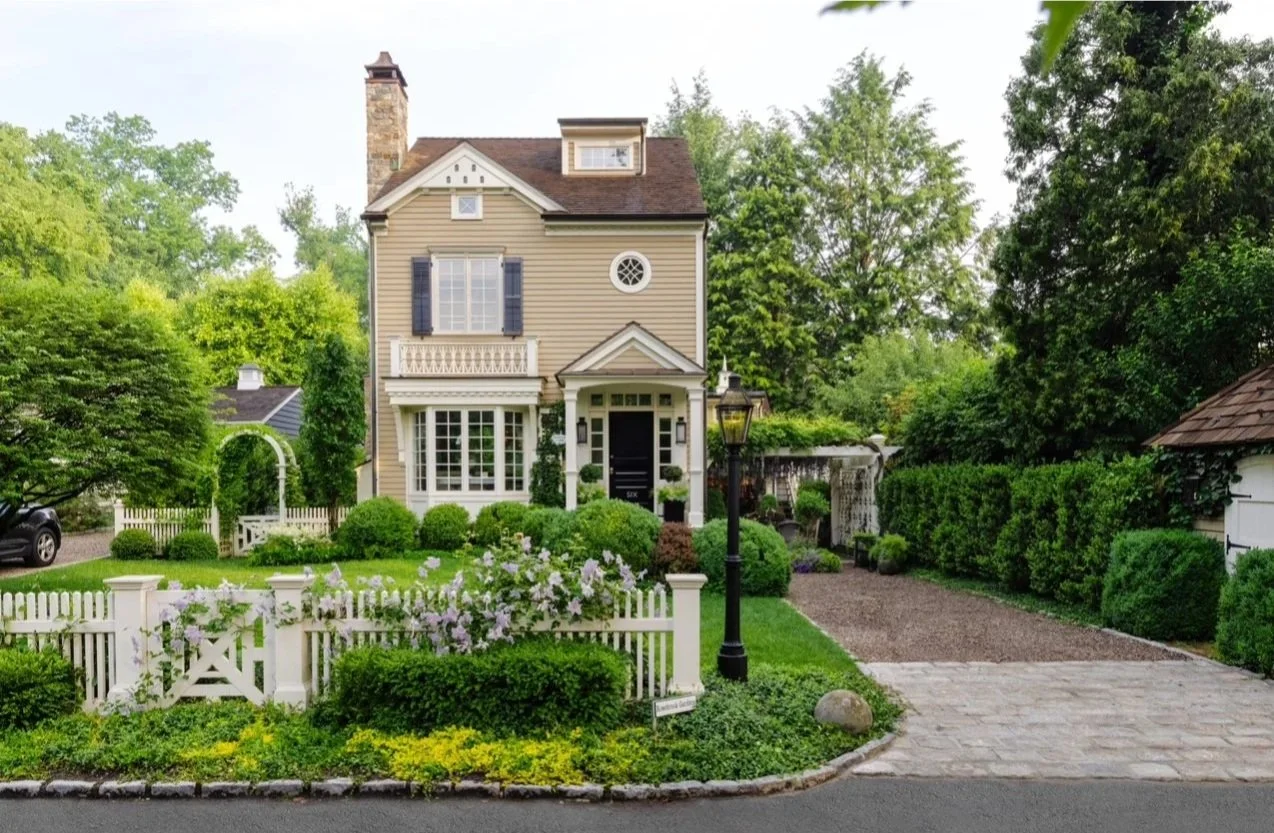
A home by Further Afield perfectly captures this shift. Its warm beige exterior and charcoal trim create contrast without the starkness of black and white, offering a look that feels sophisticated, welcoming, and deeply rooted in its surroundings.
Featured Project: Further Afield
2. Blue Gets a New England Update
Blue has always been part of New England's design vocabulary, but today's interpretations feel more refined.
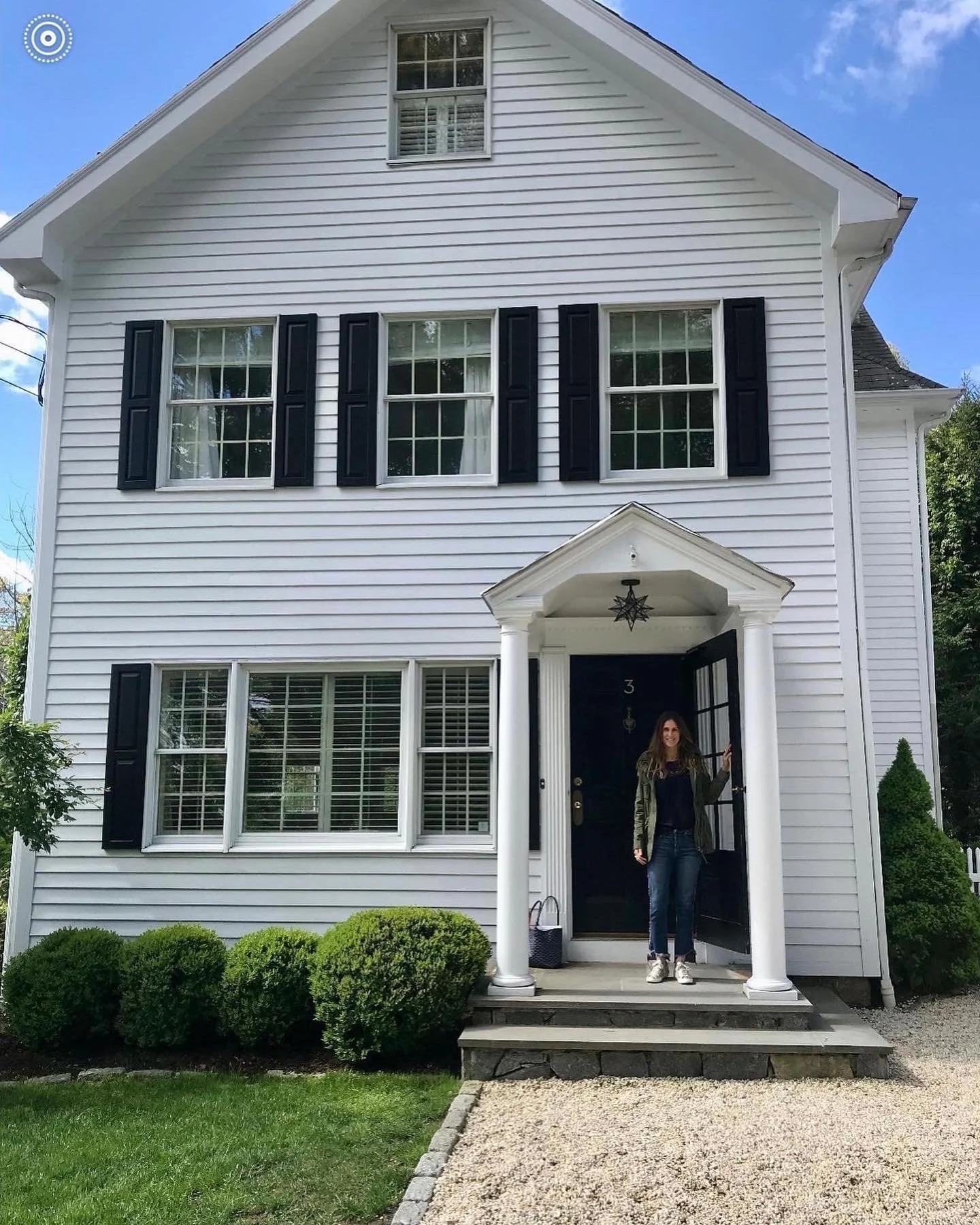
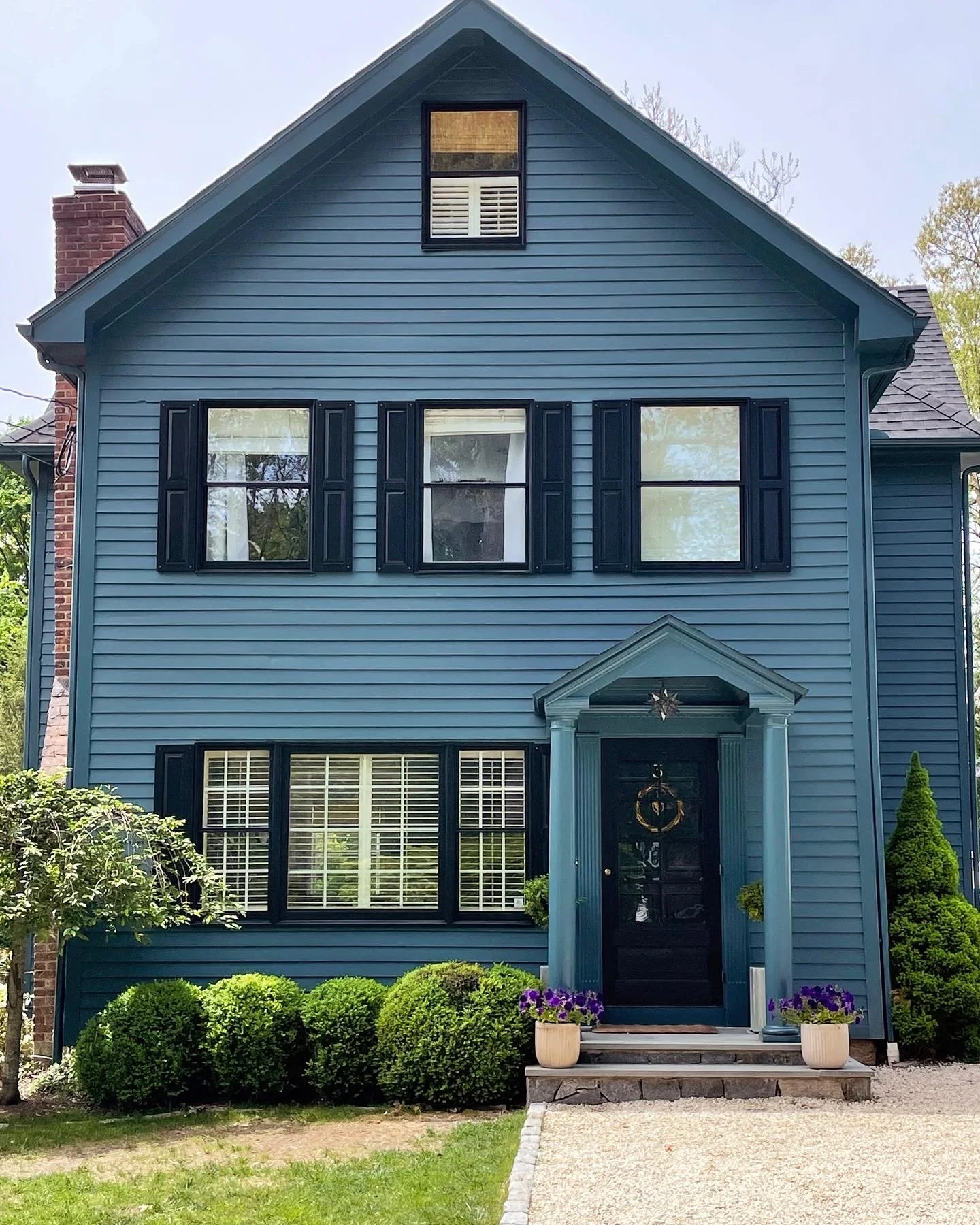
Rather than pairing blue siding with bright white trim, homeowners are embracing monochromatic combinations that allow the color to take center stage. Graphic designer Riva Fischel took this approach with her Connecticut home, choosing a rich blue-gray exterior paired with darker tonal trim.
The result feels distinctly New England while offering a fresh alternative to more expected farmhouse-inspired palettes.
Featured Project: Riva Fischel Home
3. White Houses Aren't Going Anywhere
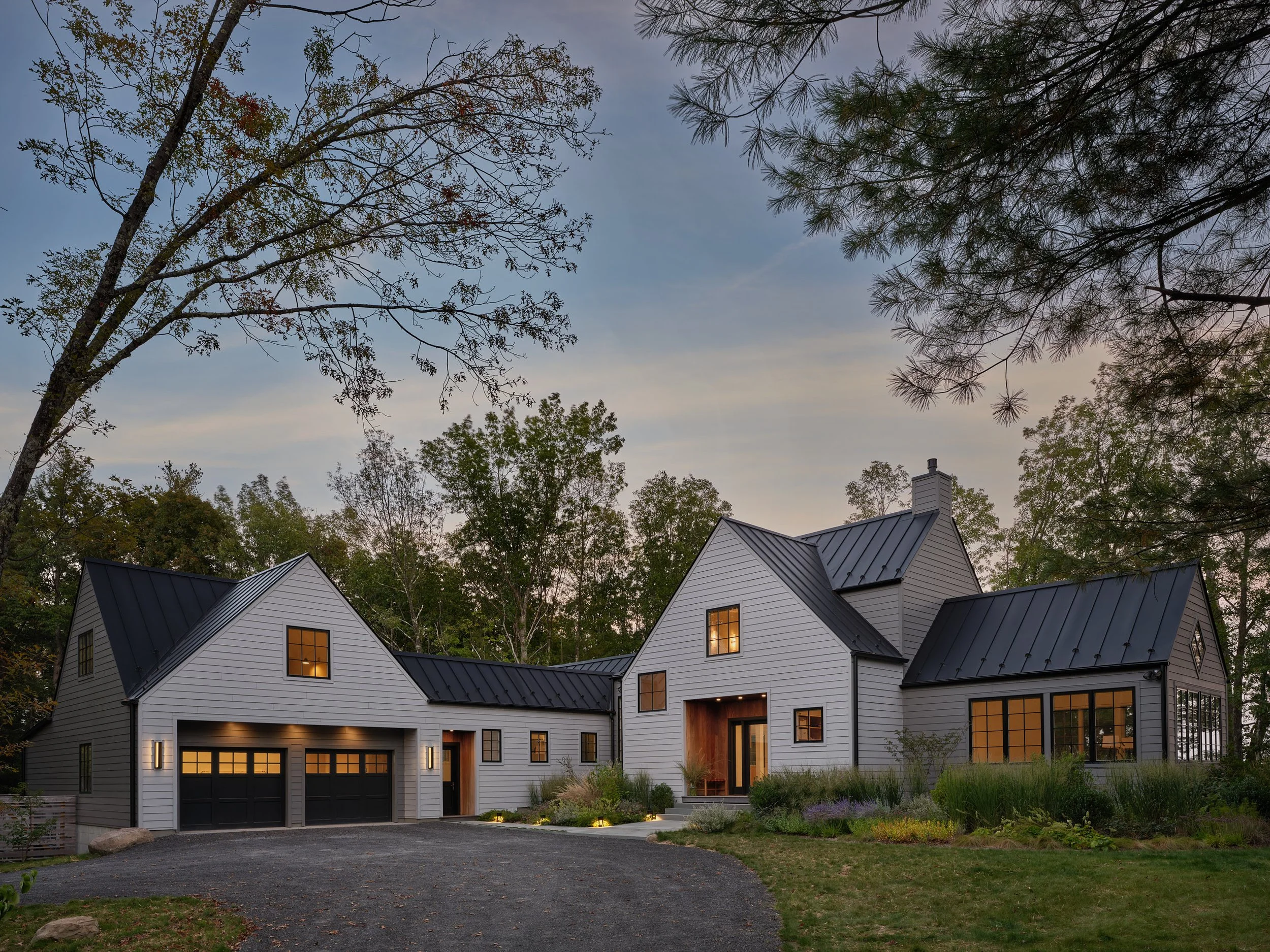
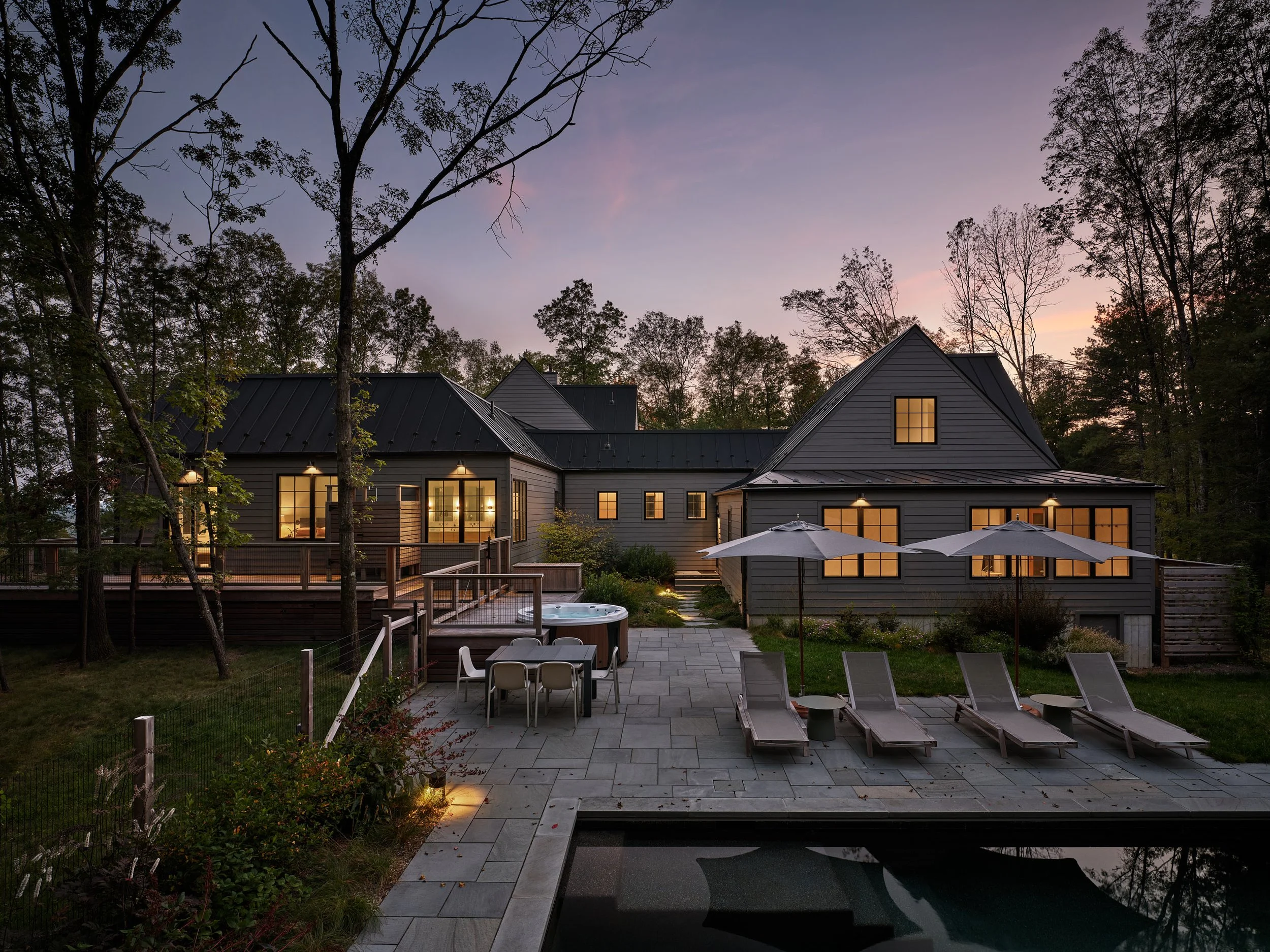
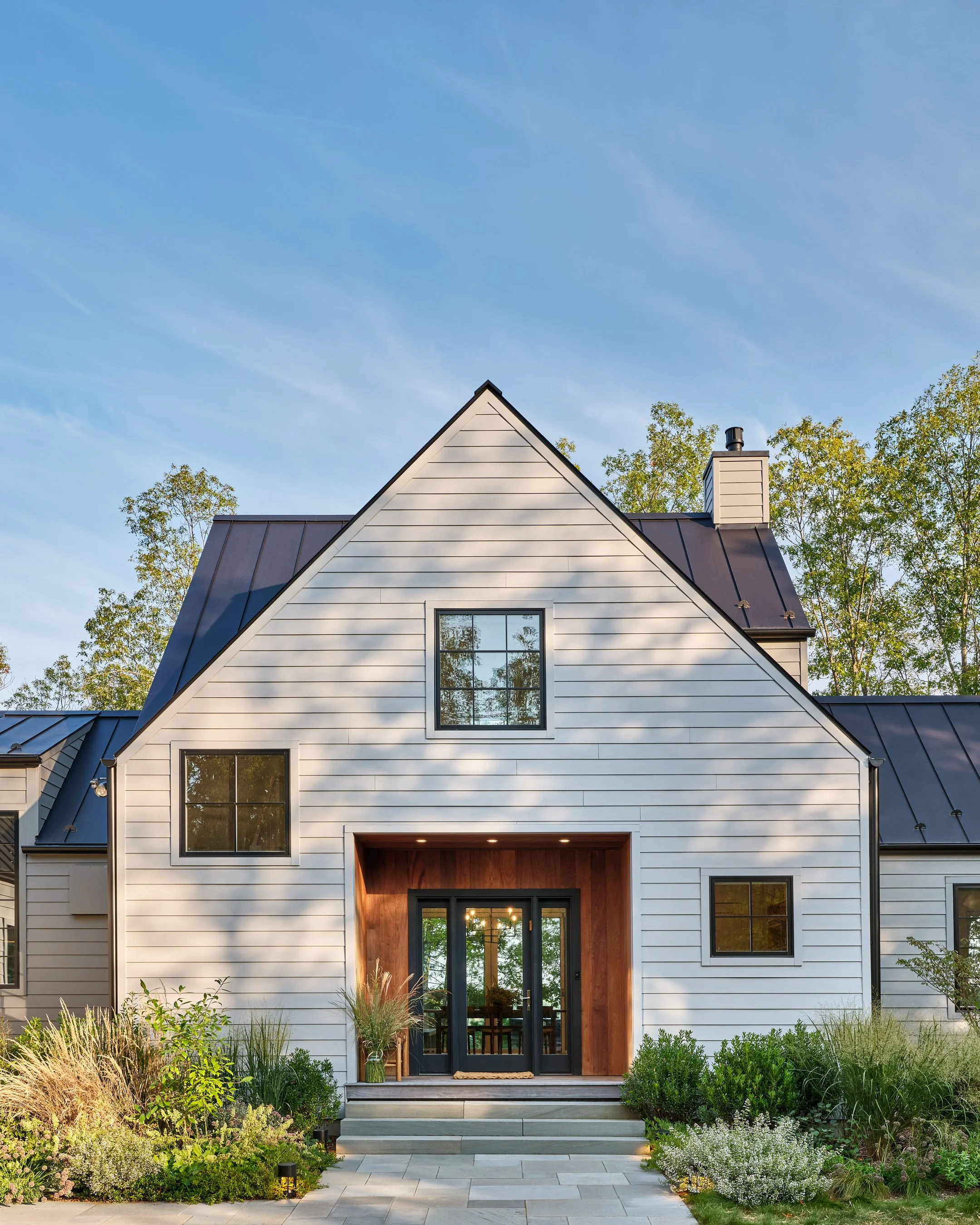
White exteriors remain popular, but designers are finding new ways to make them feel warmer and more layered.
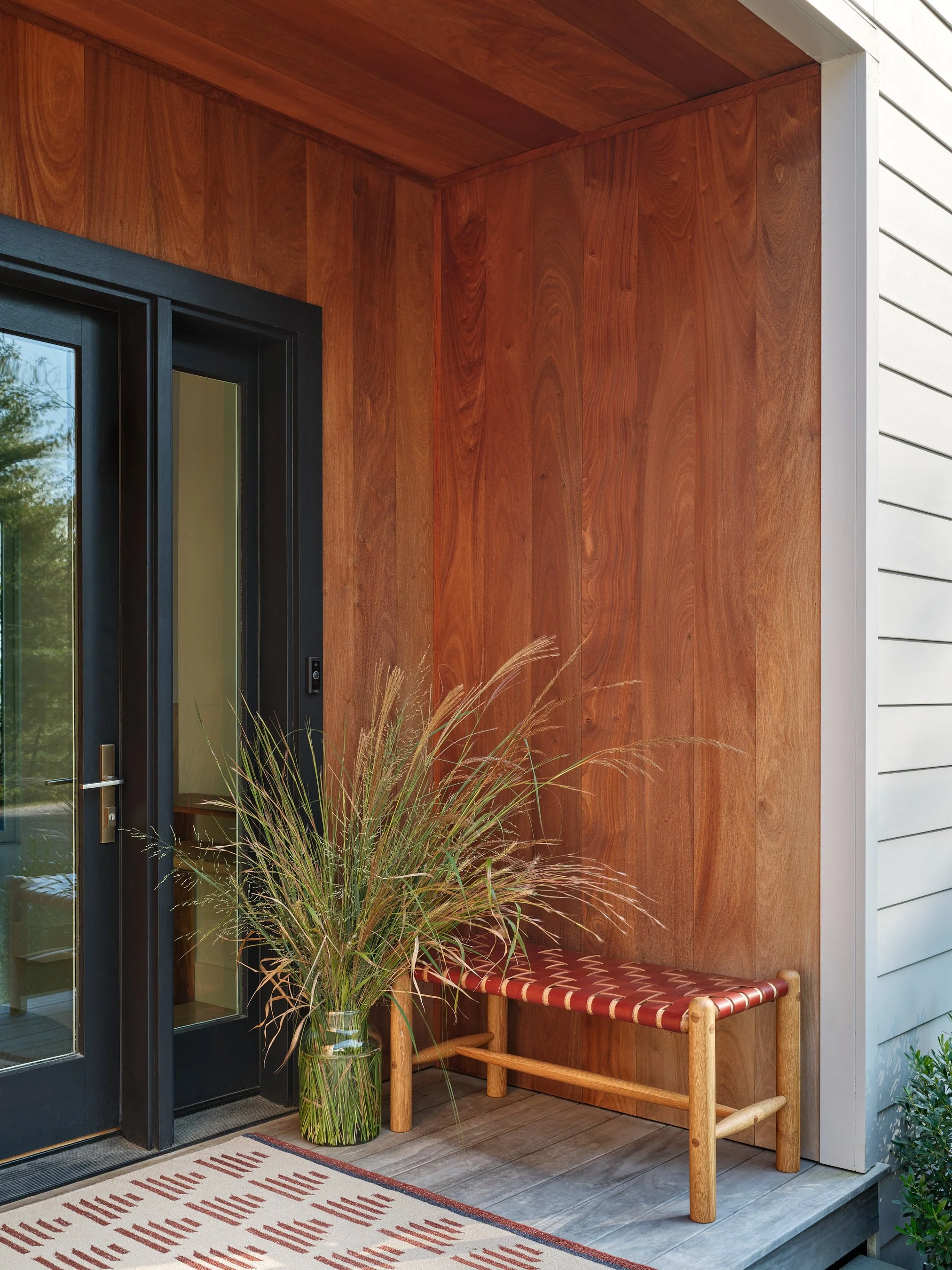
Projects by Carta Creatives demonstrate how white shingle homes can feel both classic and contemporary when paired with charcoal accents, soft gray details, and natural wood elements. The combination creates depth and texture while allowing the architecture to remain the focal point.
Rather than relying on contrast alone, these homes achieve visual interest through materiality and thoughtful detailing.
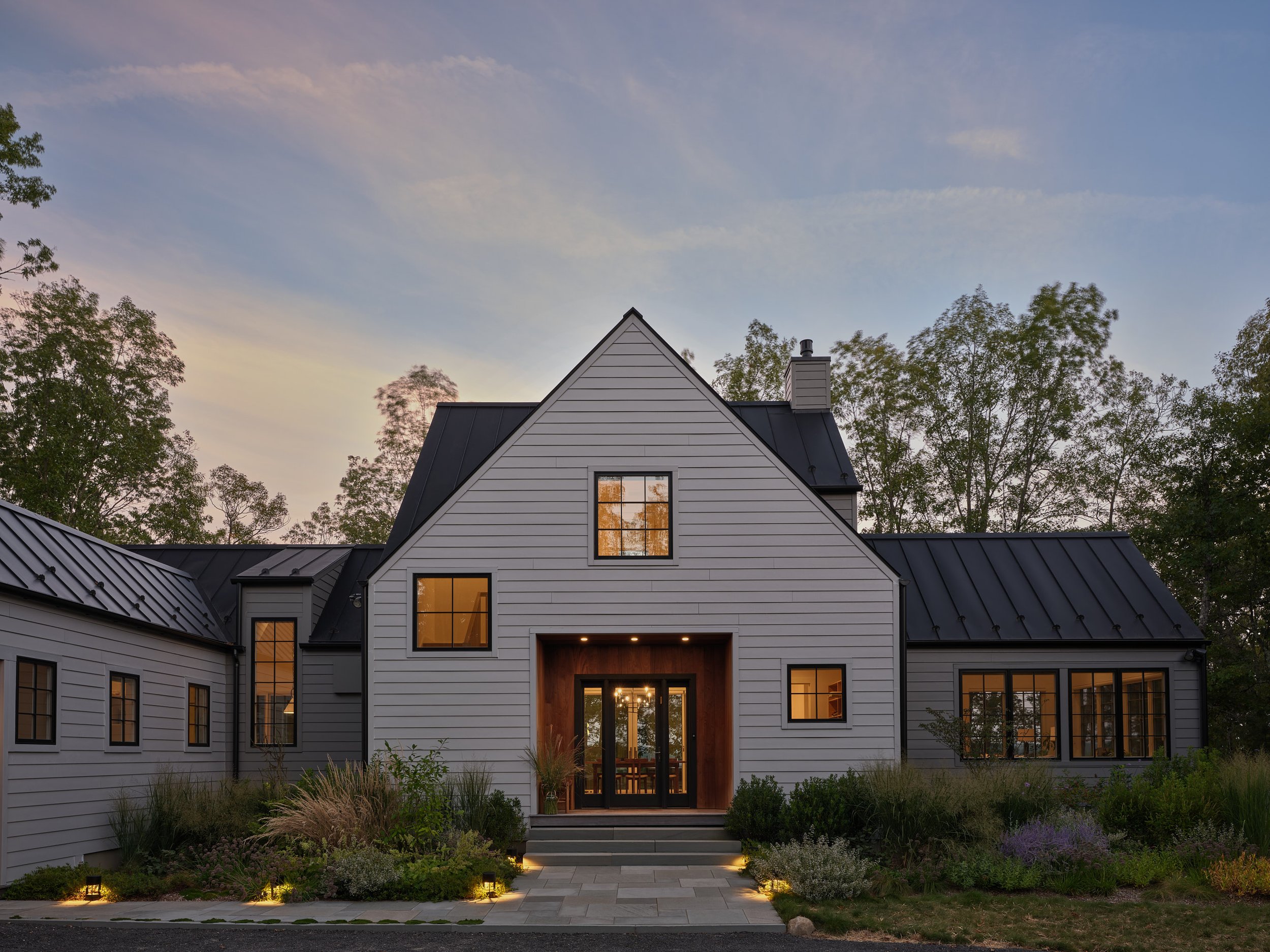
Featured Project: Carta Creatives
4. Green Is Becoming the New Neutral
Among the colors gaining momentum, green may be the most versatile.
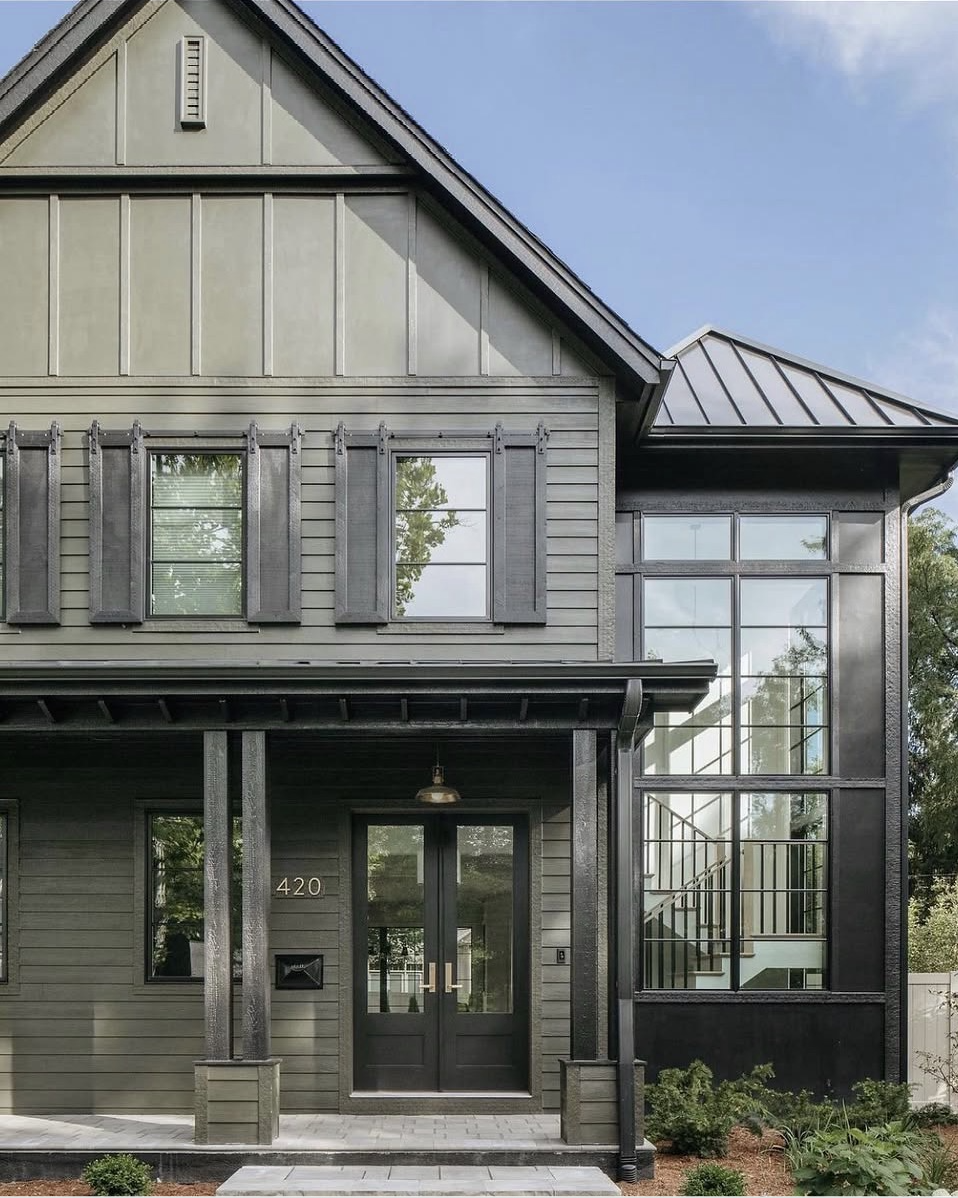
Deep olive, moss, and heritage-inspired greens are increasingly being treated as neutrals, particularly in New England landscapes where they blend naturally with surrounding trees and gardens.
The appeal is obvious: green introduces color without overwhelming the architecture, making it an attractive choice for homeowners looking to move beyond white while maintaining a timeless feel.
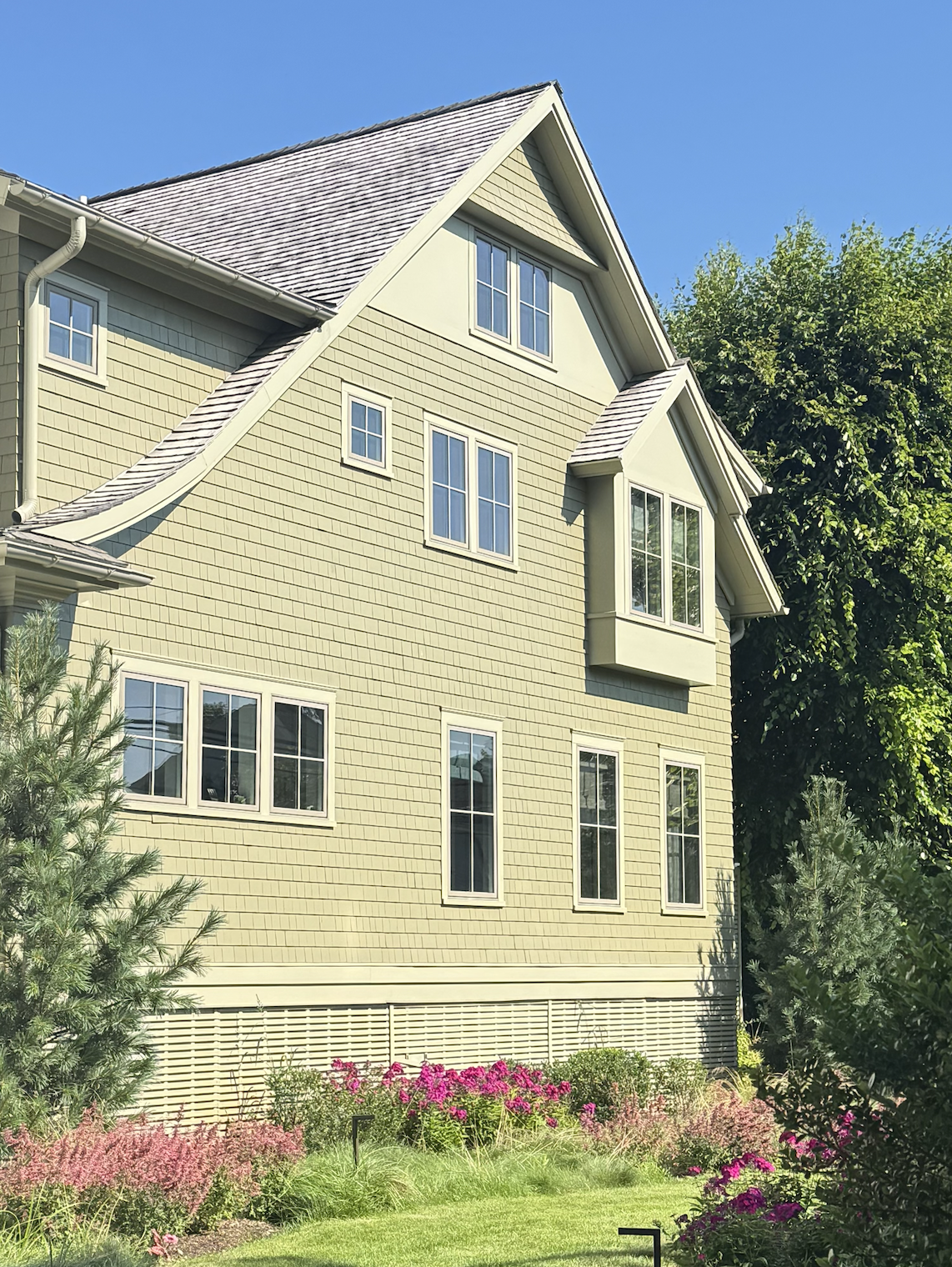
Featured Projects: (left) A home near the beach in Westport saturated in khaki green.
(right): An older home, renovated and designed by M House Development, painted deep olive with black accents.
5. Tone-on-Tone Is One of the Biggest Trends Right Now
If there's one trend designers are most excited about, it may be tonal monochromatic exteriors.
"Tonal monochromatics have become one of the strongest trends I'm seeing," says Debra Spindler Pinals, founder of Spinpin Creative. "Painting trim the same color, or a half-shade lighter, than the siding creates a collected quality that works especially well on saltboxes and older Colonials. I love this one because it softens all the harsh lines that white trim can create. The house reads as one cohesive shape rather than a collection of contrasting parts."
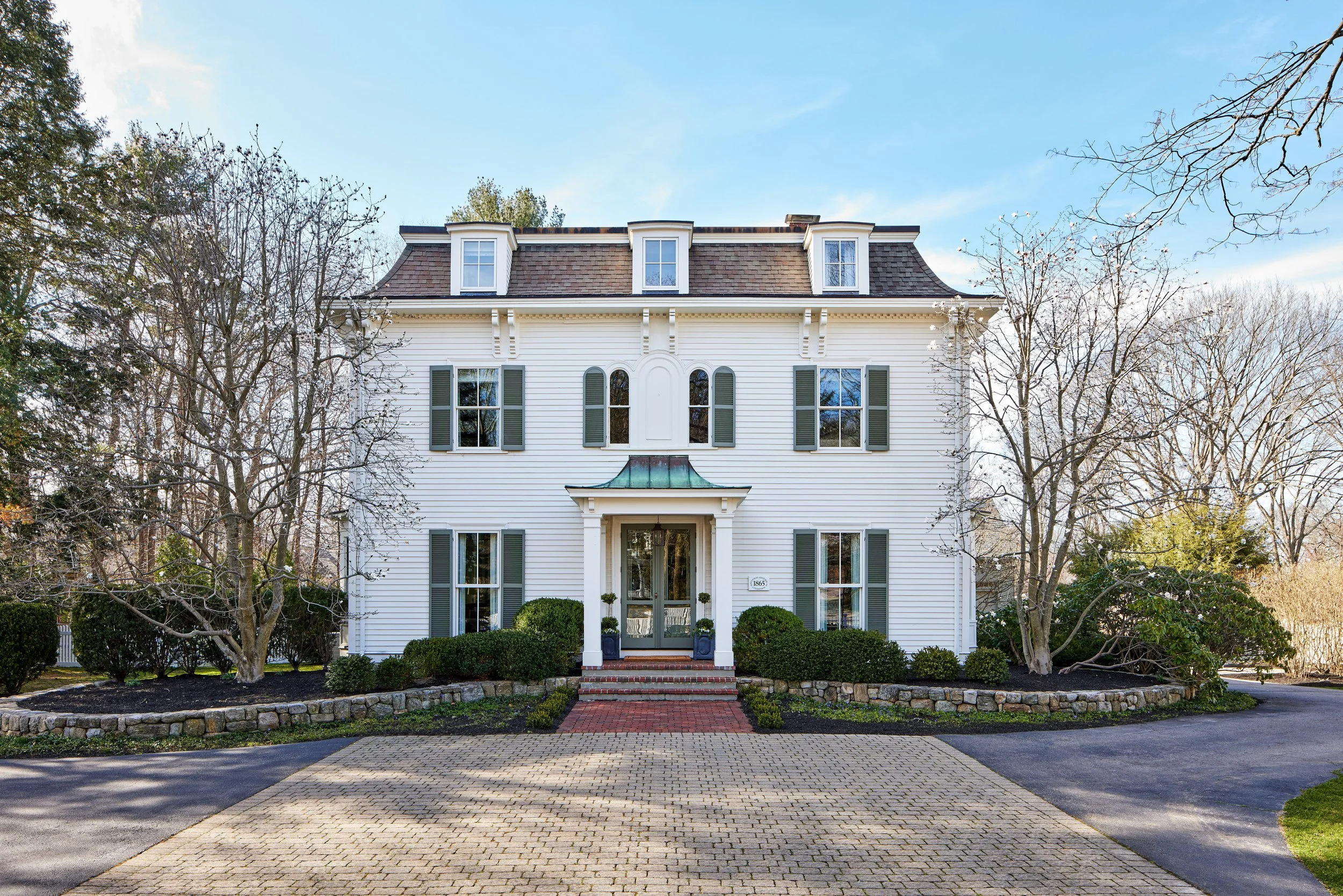
This Historic Somerville Victorian featured in New England Homeembraces this approach, using layered shades within the same color family to create homes that feel both historic and current.
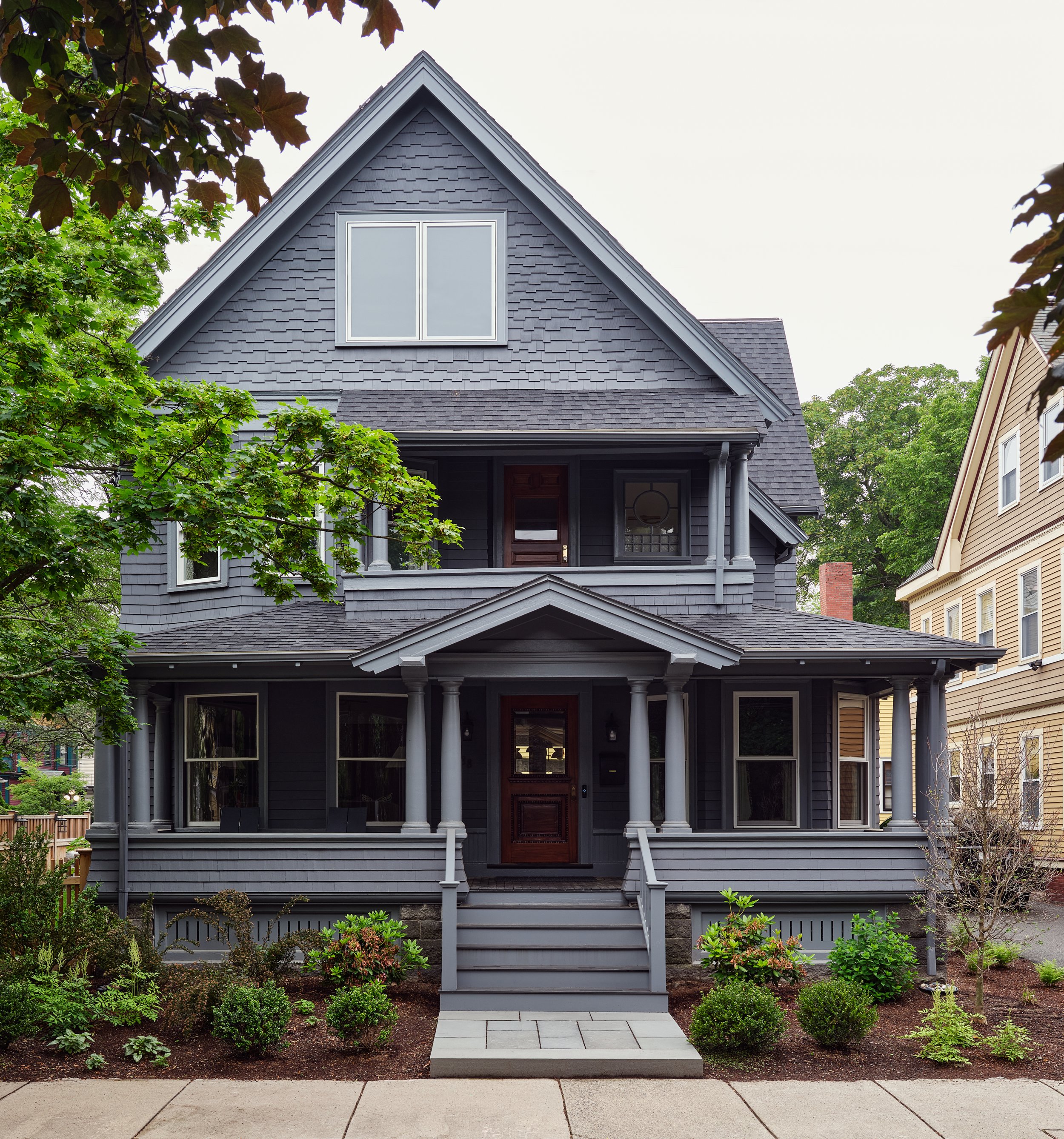
Photo by Sean Litchfield
6. Texture Matters as Much as Color
While paint colors are evolving, designers say materials may be playing an even bigger role in defining today's exteriors.
"Layered materiality is the other big one," says Debra Spindler Pinals. "Combining painted surfaces with natural cedar, board-and-batten, or stone adds so much texture and depth and also just makes sense here historically. New England homes were originally a mix of whatever materials were available: stone foundations, cedar shingles, clapboard siding. So this is not a trend imported from somewhere else, it's a return to the way these houses were always built."
The trend can be seen across many of the homes being built today, where wood-clad entryways, cedar shingles, stone foundations, and painted siding work together to create depth and character.
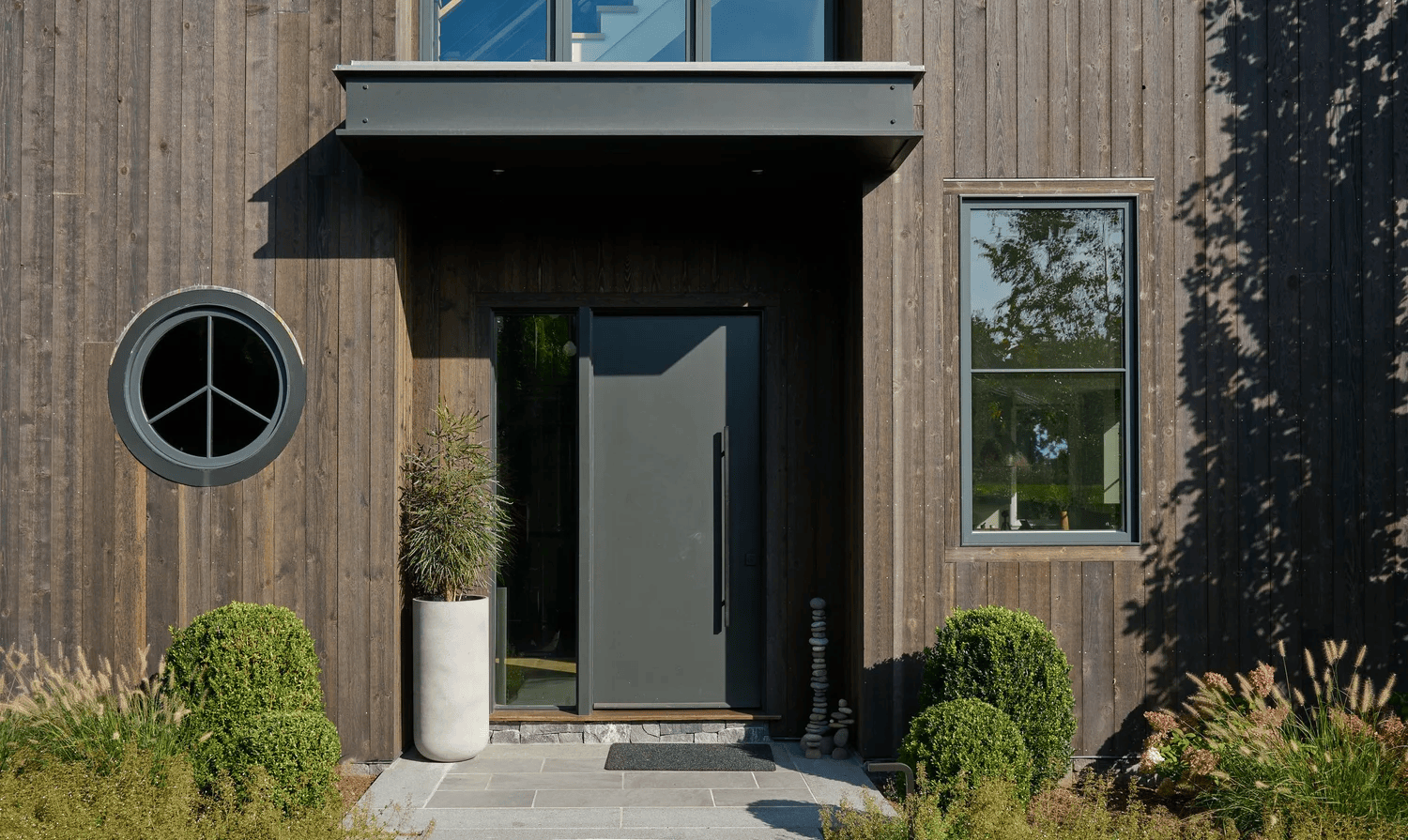
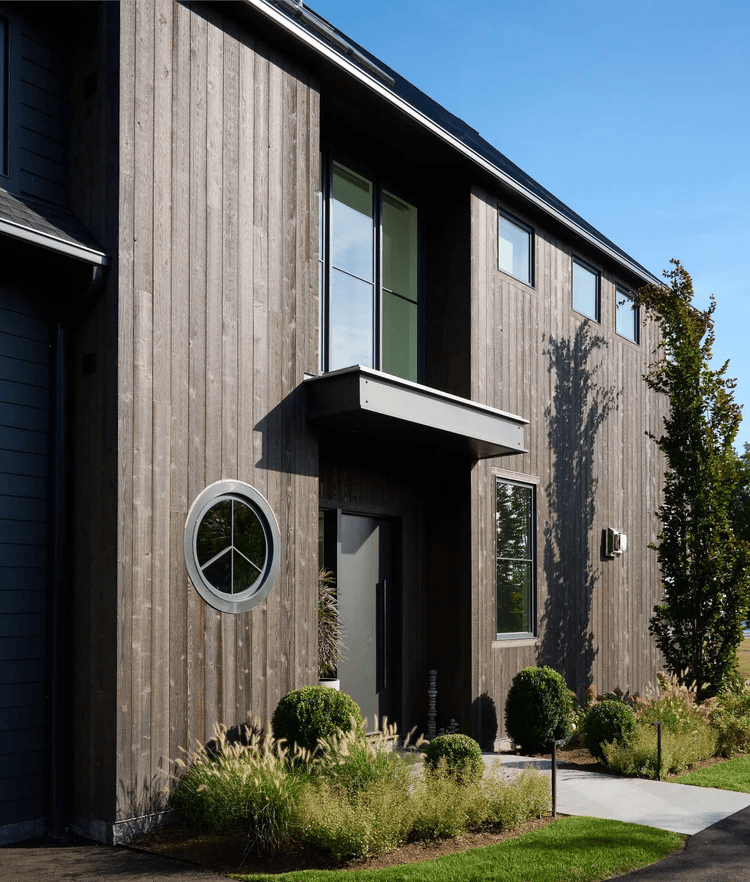
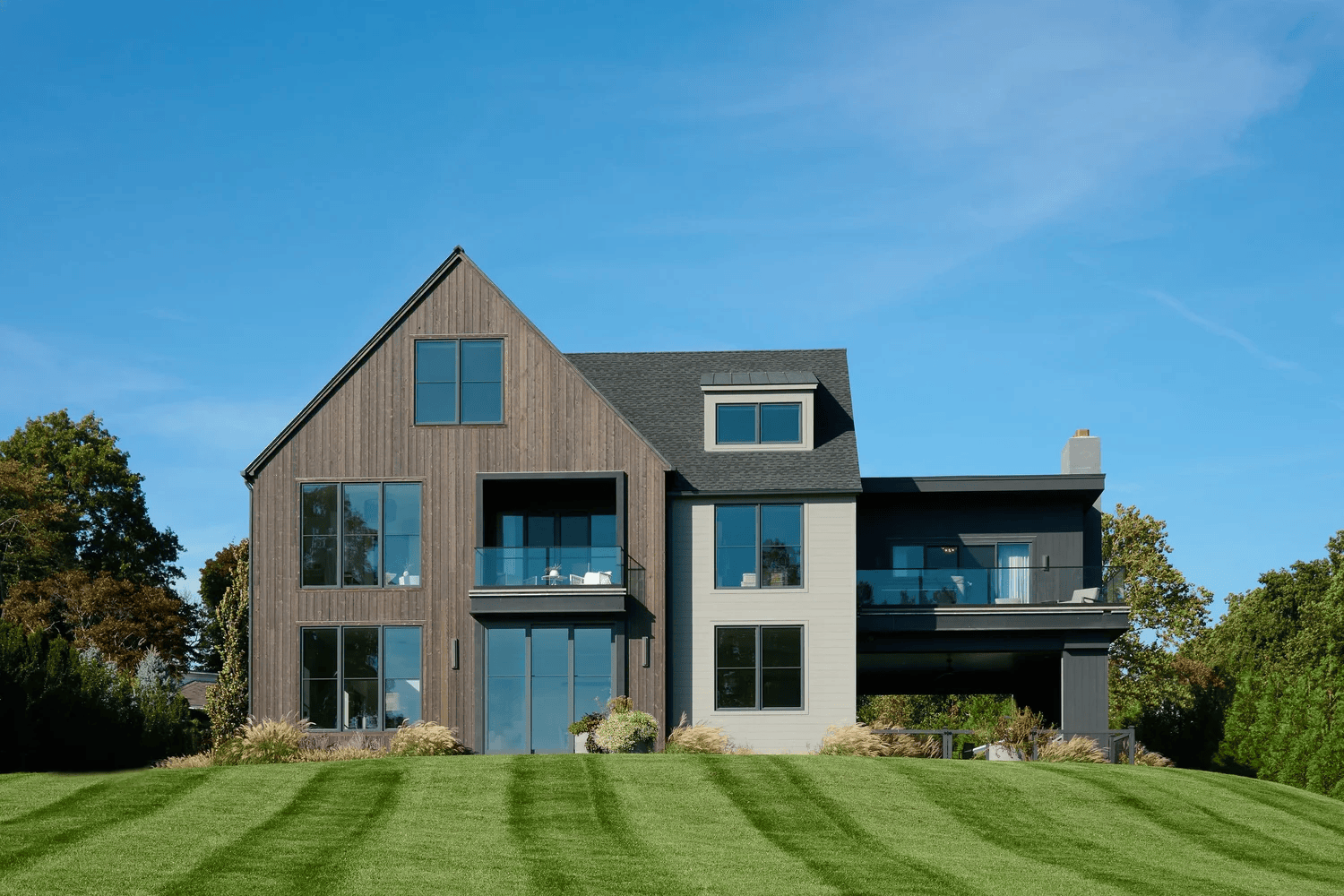
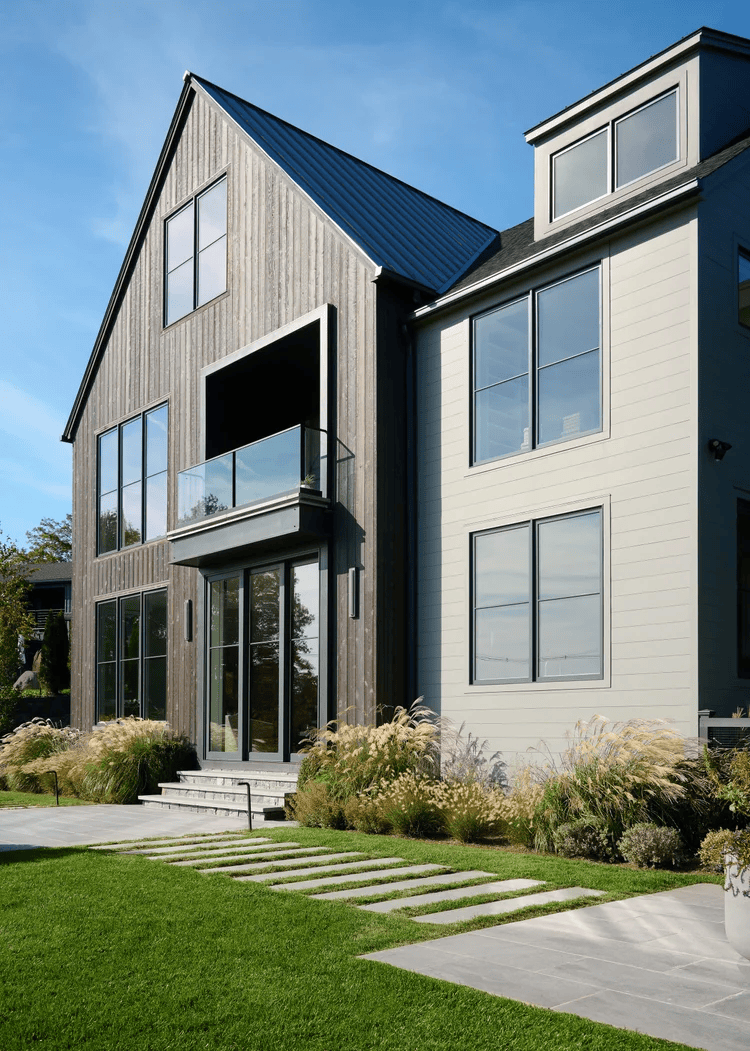
Featured Project: Modern Barn by Stephanie Rapp Interiors. Photography by Jane Beiles
7. The Front Door Is Still the Easiest Way to Add Personality
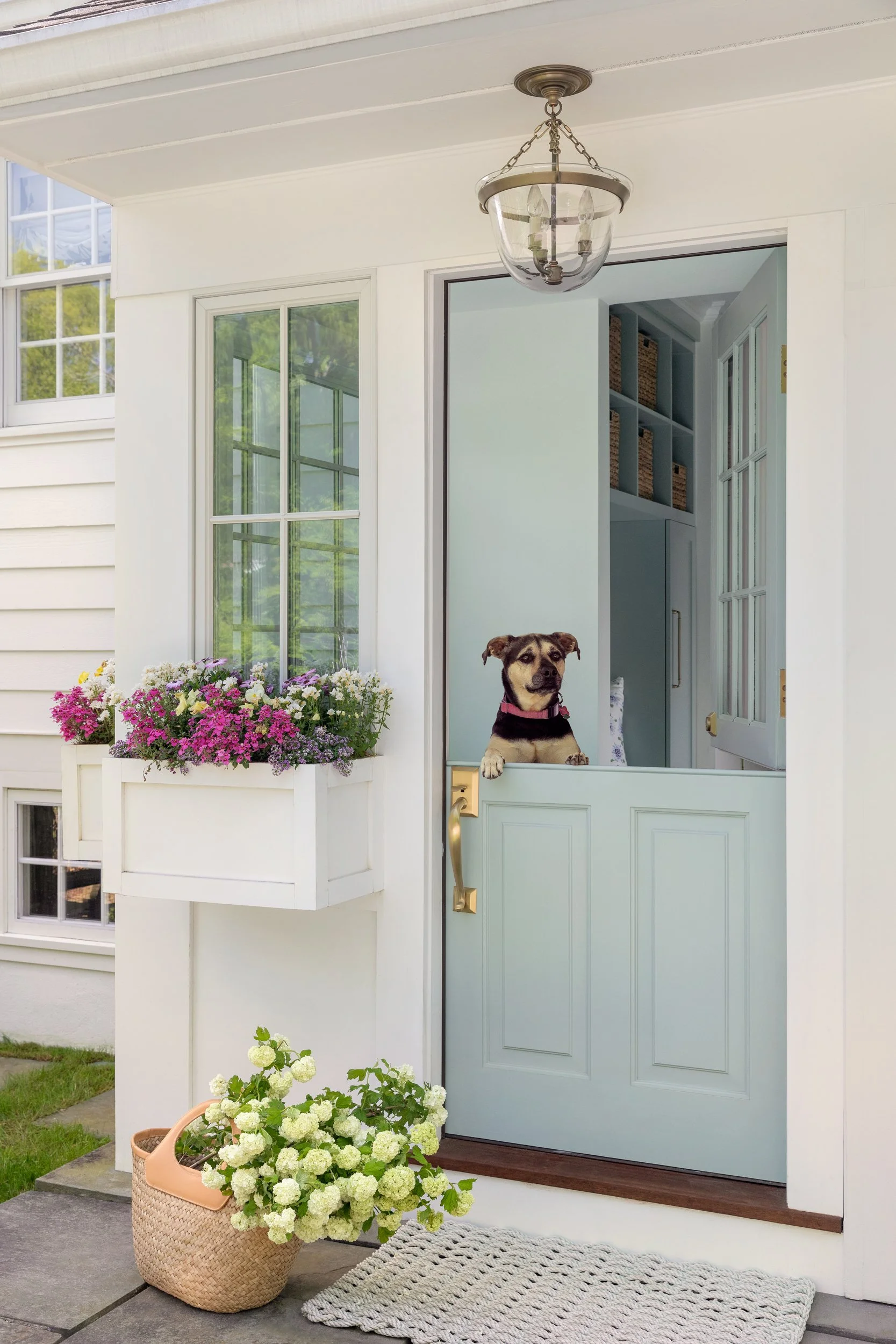
For homeowners who aren't ready to repaint an entire house, designers say the front door remains one of the easiest ways to introduce color and character.
"Deep terracotta, dusty sage, or lacquered navy against a quiet body color does a lot of work," says Debra Spindler Pinals.
She's also seeing a growing appreciation for reclaimed and antique wood doors.
"Chunky, character-rich, full of history," she says. "Against a warm taupe or muted olive exterior, a natural wood door is just extraordinary."
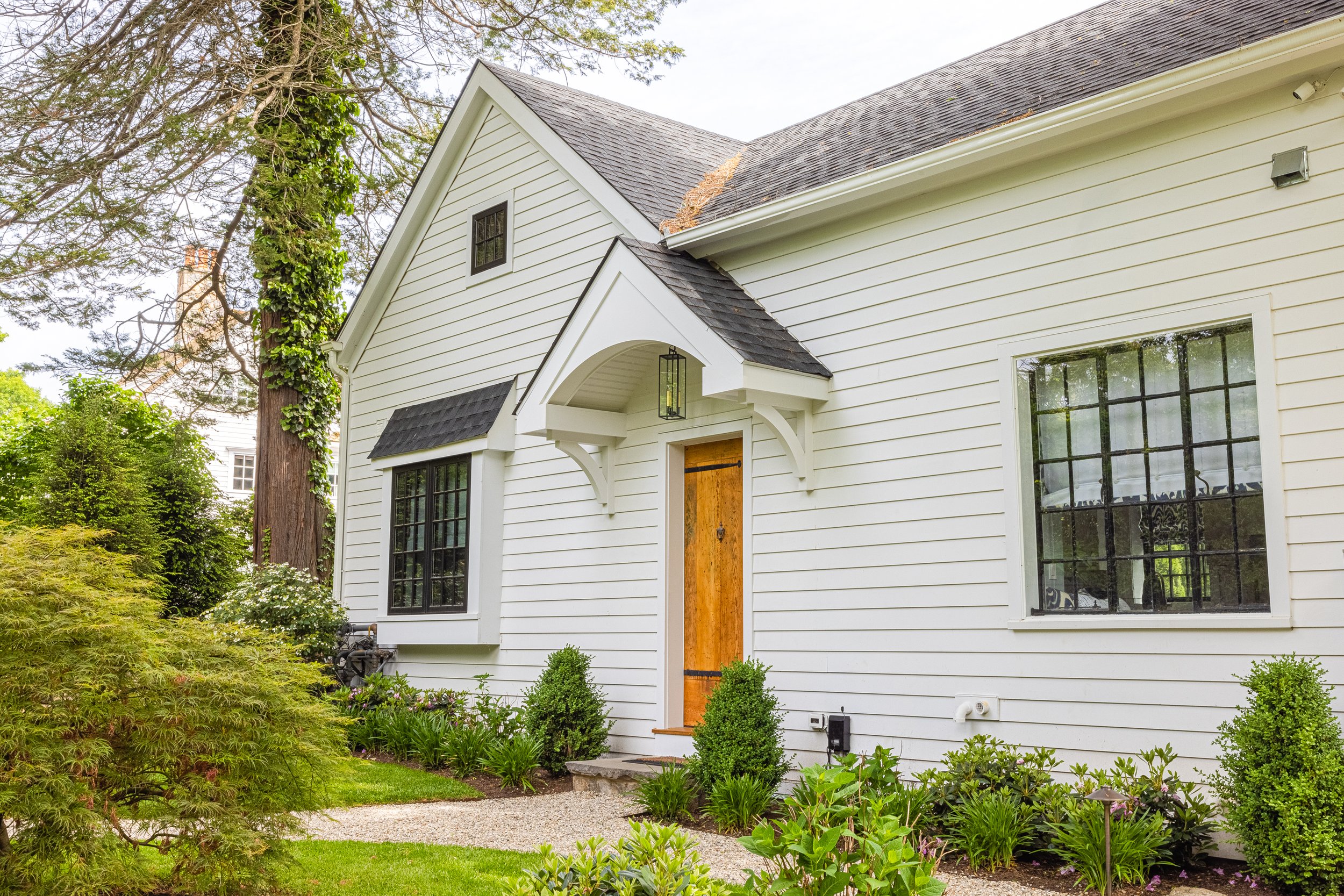
Featured Project: A Connecticut cottage renovated by The O’Dell Group.
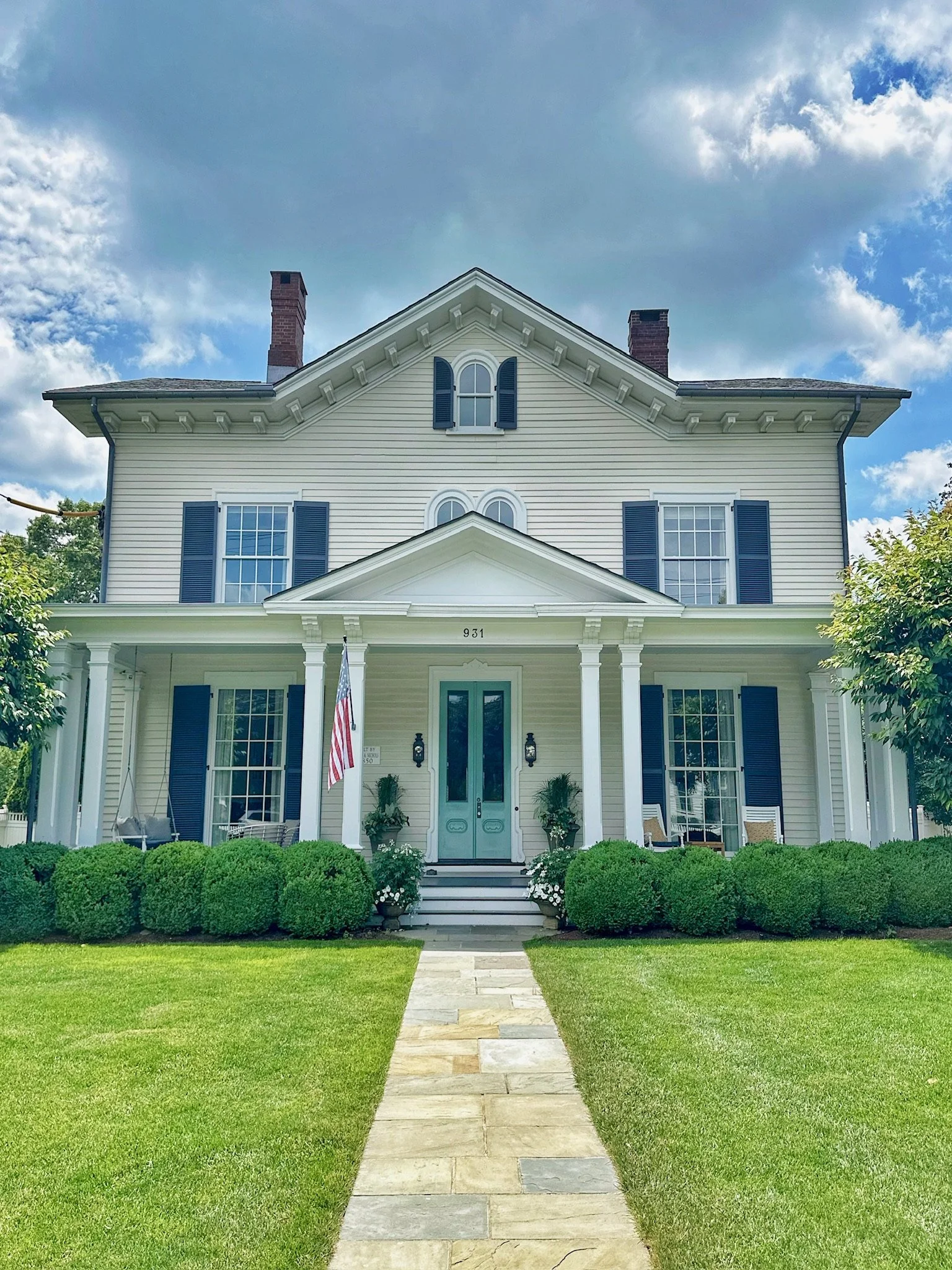
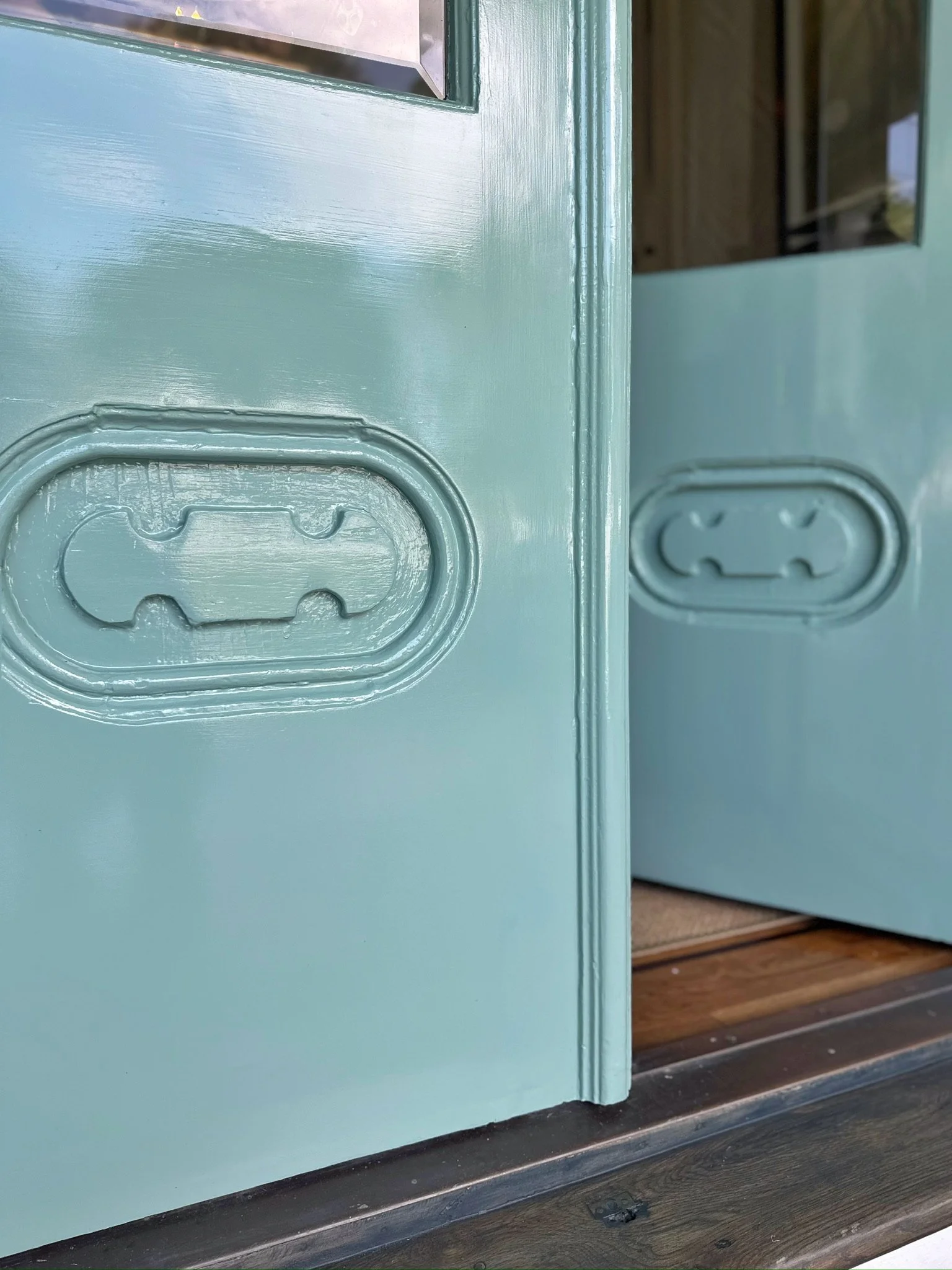
Featured Project: Alison Stein’s 1850’s Fairfield home. Front Door: Benjamin Moore’s Waterbury Green in high-gloss. Photo Credit: Tomira Wilcox.
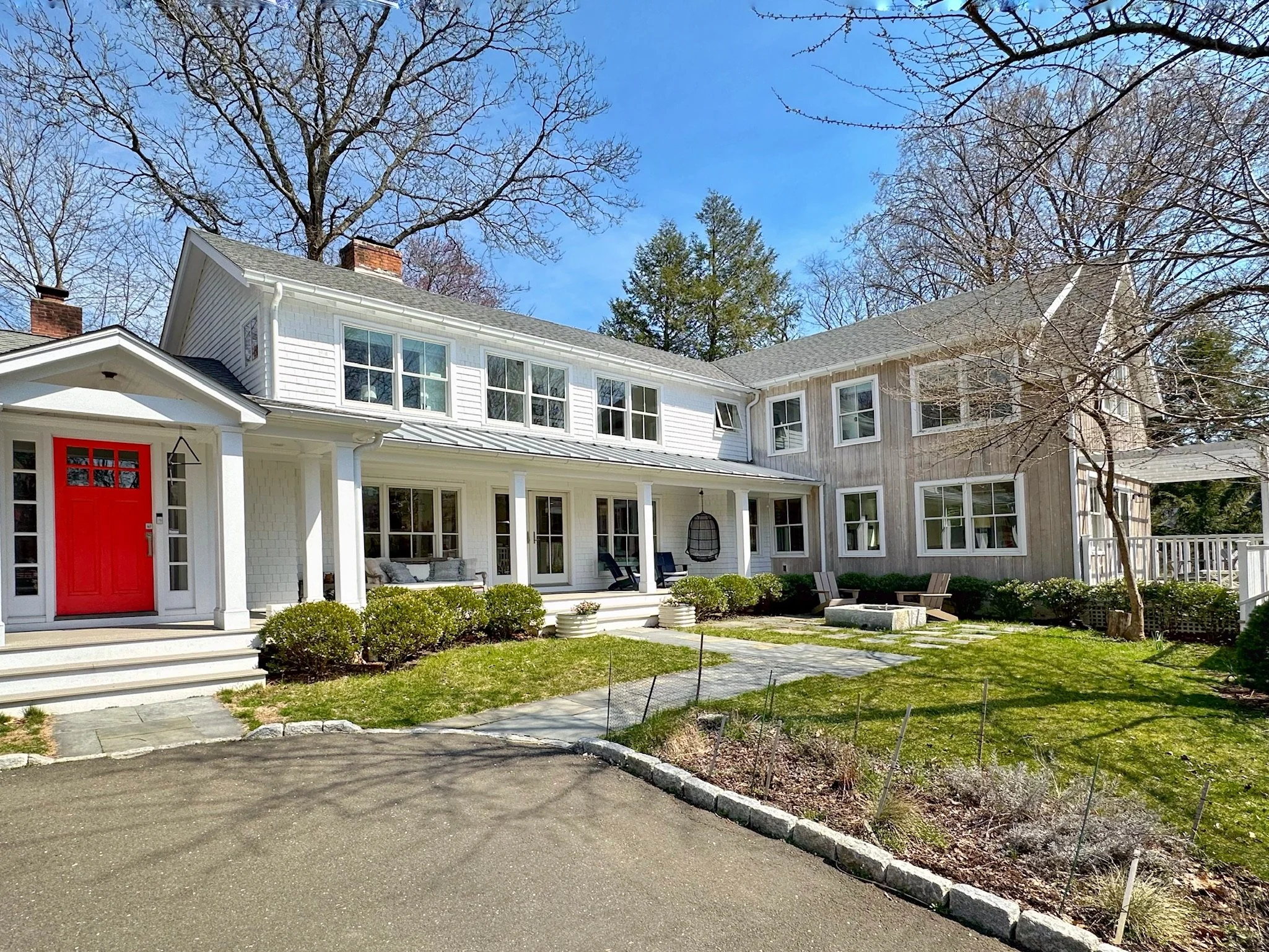
Featured Project: Jenny McGuinness’s renovated home. Front Door in Benjamin Moore’s Salsa Red.
Featured Project: New Canaan home designed by: Inspired Design, LLC
The Takeaway
The next chapter of New England exterior design isn't about abandoning white houses or declaring the modern farmhouse dead. Instead, it's about embracing palettes and materials that feel more connected to place.
Whether it's a warm stone-colored facade, a sophisticated blue-gray exterior, a heritage-inspired green, or a tonal neutral palette, today's most compelling homes share a common goal: creating a sense of warmth, authenticity, and timelessness.
What exterior color trend are you loving most? Let us know in the comments.


The design team shares how the Duomo’s iconic palette inspired La Gemma’s bold interiors, plus their best advice for using color, materials, and unexpected details at home.